Source and verification guide
Pizza Hut Allergens Guide
Use this independent guide to find mapped affirmative Contains flags, then verify the exact size, crust, sauce, topping, flavor, count, or serving with the linked official sources.
Pizza Hut kitchens and equipment can be shared. This page is informational and does not determine whether a product is suitable or safe for an allergy, intolerance, or medical need.
Pizza Hut products may be prepared in shared kitchens or on shared equipment. The flags below come from mapped source rows and cannot describe every handling condition, substitution, supplier, or cross-contact event at a particular restaurant. An empty or missing flag is not evidence that an allergen is absent.
Verify before relying on a result
Official sources and the local snapshot
This local catalog uses a source snapshot dated 2026-07-28. It is an independent presentation and does not make a live vendor request.
Pizza Hut Calorie Calculator is an independent website and is not affiliated with, endorsed by, sponsored by, or operated by Pizza Hut. Use the official links above for current source information.
National Standard Menu
Affirmative Contains summaries by product
Each product appears once. A flag list is the conservative union of affirmative Contains labels found across that product's supported configurations, so it is a discovery summary rather than the exact result for every version. Select the calculator link to choose the configuration you actually need.
Pizza
9 products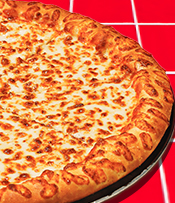
Pizza
Cheese Pizza
Configuration-dependent union
- Egg
- Gluten
- Milk
- Soy
- Wheat
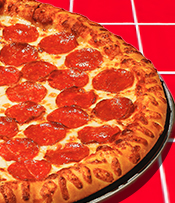
Pizza
Pepperoni Pizza
Configuration-dependent union
- Egg
- Gluten
- Milk
- Soy
- Wheat
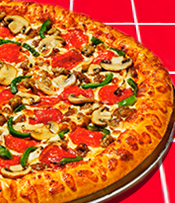
Pizza
Supreme Pizza
Configuration-dependent union
- Egg
- Gluten
- Milk
- Soy
- Wheat
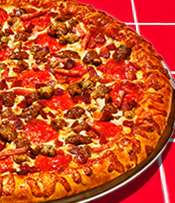
Pizza
Meat Lover's Pizza
Configuration-dependent union
- Egg
- Gluten
- Milk
- Soy
- Wheat
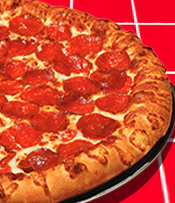
Pizza
Pepperoni Lover's Pizza
Configuration-dependent union
- Egg
- Gluten
- Milk
- Soy
- Wheat
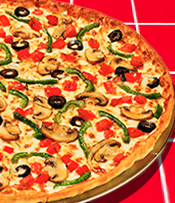
Pizza
Veggie Lover's Pizza
Configuration-dependent union
- Egg
- Gluten
- Milk
- Soy
- Wheat
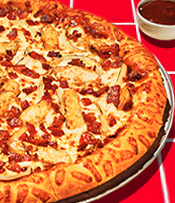
Pizza
Backyard BBQ Chicken Pizza
Configuration-dependent union
- Gluten
- Milk
- Soy
- Wheat
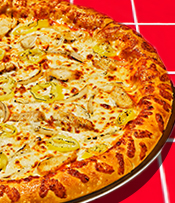
Pizza
Buffalo Chicken Pizza
Configuration-dependent union
- Gluten
- Milk
- Soy
- Wheat
Pizza
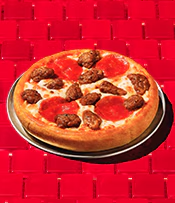
Create Your Own Pizza
Configuration-dependent union
- Egg
- Gluten
- Milk
- Soy
- Wheat
Melts
4 products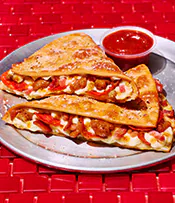
Melts
Meat Lover's Melt
Configuration-dependent union
- Gluten
- Milk
- Soy
- Wheat
Melts
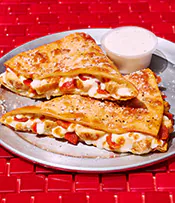
Chicken Bacon Parmesan Melt
Configuration-dependent union
- Egg
- Gluten
- Milk
- Soy
- Wheat
Melts
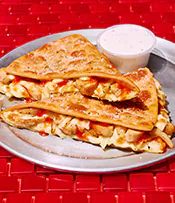
Buffalo Chicken Melt
Configuration-dependent union
- Egg
- Gluten
- Milk
- Soy
- Wheat
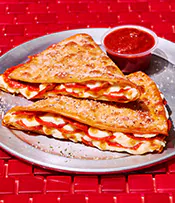
Melts
Pepperoni Lover's Melt
Configuration-dependent union
- Gluten
- Milk
- Soy
- Wheat
Wings
1 product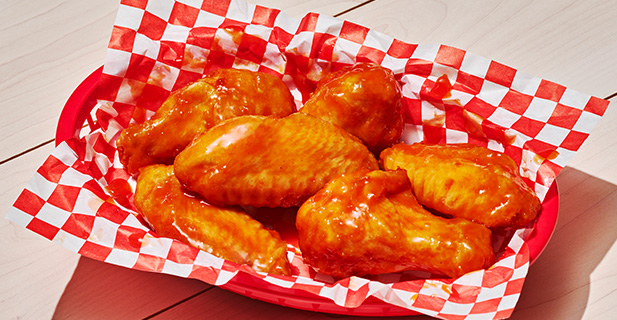
Wings
Wings
Configuration-dependent union
- Egg
- Gluten
- Milk
- Sesame
- Soy
- Wheat
Pasta
4 products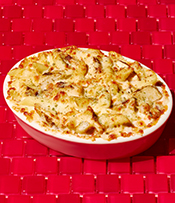
Pasta
Oven-Baked Chicken Alfredo Pasta
Configuration-dependent union
- Gluten
- Milk
- Soy
- Wheat
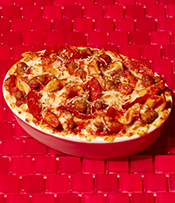
Pasta
Oven-Baked Italian Meats Pasta
Configuration-dependent union
- Gluten
- Milk
- Wheat
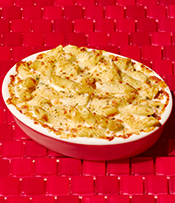
Pasta
Oven-Baked Cheesy Alfredo Pasta
Configuration-dependent union
- Gluten
- Milk
- Soy
- Wheat
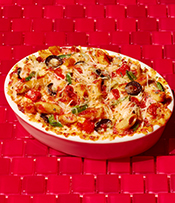
Pasta
Oven-Baked Veggie Pasta
Configuration-dependent union
- Gluten
- Milk
- Wheat
Sides
3 products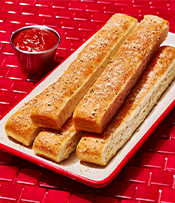
Sides
Breadsticks
Configuration-dependent union
- Gluten
- Milk
- Soy
- Wheat
Sides
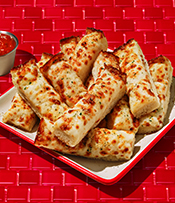
Cheese Sticks
Configuration-dependent union
- Gluten
- Milk
- Wheat
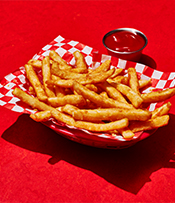
Sides
Straight-Cut Fries
Configuration-dependent union
- Gluten
- Wheat
Desserts
4 products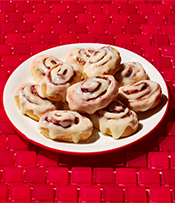
Desserts
Cinnabon Mini Rolls
Configuration-dependent union
- Gluten
- Milk
- Soy
- Wheat
Desserts
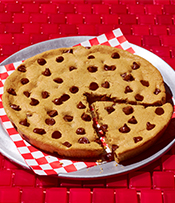
Ultimate Chocolate Chip Cookie
Configuration-dependent union
- Egg
- Gluten
- Milk
- Soy
- Wheat
Desserts
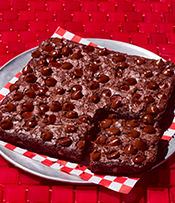
Triple Chocolate Brownie
Configuration-dependent union
- Egg
- Gluten
- Milk
- Soy
- Wheat
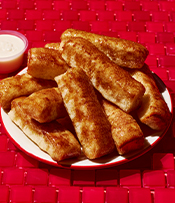
Desserts
Cinnamon Sticks
Configuration-dependent union
- Gluten
- Soy
- Wheat
Drinks
4 products
Drinks
Pepsi
Configuration-dependent union
No affirmative flag was recorded in the mapped rows. This is not an absence or safety claim.
Check exact configuration in calculator
Drinks
Diet Pepsi
Configuration-dependent union
No affirmative flag was recorded in the mapped rows. This is not an absence or safety claim.
Check exact configuration in calculator
Drinks
Mtn Dew
Configuration-dependent union
No affirmative flag was recorded in the mapped rows. This is not an absence or safety claim.
Check exact configuration in calculator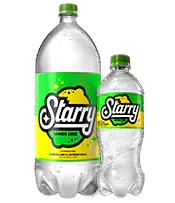
Drinks
Starry
Configuration-dependent union
No affirmative flag was recorded in the mapped rows. This is not an absence or safety claim.
Check exact configuration in calculatorDips
1 product
Reader guide
How to read Pizza Hut allergen information without over-interpreting a flag
Allergen information is most useful when the question is precise. Are you checking a source label, reading an ingredient statement, comparing two configurations, or trying to understand what a shared kitchen means? This guide separates those jobs so the directory remains a practical starting point while official Pizza Hut sources remain the authority for current details.
The product cards above are deliberately conservative. They gather affirmative Contains labels from mapped rows across the supported configuration tree. That makes it easy to notice a flag that appears somewhere in the product family, but it cannot tell you that every version has the same ingredients or that a restaurant can prepare a particular order under identical conditions. For an exact answer, continue into the calculator and choose the complete configuration.
What this Pizza Hut allergens directory represents
This page is a source navigation layer for the calculator catalog. It covers the 30 canonical National Standard Menu products already represented by the site: pizza, Melts, wings, pasta, sides, desserts, drinks, and dips. A product remains one product even when it has many size, crust, sauce, topping, flavor, count, or serving choices. That keeps the directory scannable and avoids presenting a long list of nearly identical menu entries as if each were a separate recipe.
The word “Contains” is important. A label shown on a card means that an affirmative label was present in at least one mapped row for that product. It is evidence about the captured source record, not a complete ingredient list and not a statement about every preparation. A union is useful for discovery because it prevents a broad product family from appearing blank simply because one variant had no mapped flag. It is intentionally less specific than the resolved line inside the calculator.
The four mapped drink products with no affirmative labels demonstrate why a blank result needs careful wording. The page says that no affirmative flag was recorded in the mapped rows and immediately explains that this is not evidence of absence or safety. The same rule applies to any future row that is missing, incomplete, or outside the captured source coverage. Unknown information stays unknown rather than becoming a reassuring zero.
Use the directory when you need a fast product-level orientation, then use the Pizza Hut calorie calculator for a configured selection. The menu calories page is helpful for product descriptions and category browsing, while the nutrition methodology guide explains serving units and qualifiers. These pages complement one another; none replaces current official information.
How affirmative allergen flags are mapped
The production catalog is a committed local JSON document generated from saved Pizza Hut menu and nutrition evidence. Each product contains one or more supported variants. Finished pizza rows carry their own serving, size, crust, nutrition fields, and any affirmative Contains values. Builder products carry nested choices or grouped rows. The presentation helper walks those arrays recursively, looks only for a field named contains, ignores blank values, trims labels, and removes duplicates without changing the source catalog.
This separation protects the calculator contract. The calculator already knows how to resolve one exact configuration and how to combine component flags for a selected meal line. The allergen directory does not duplicate that resolver or invent a second set of configuration rules. It projects a conservative product-family summary on the server and hands exact selection back to the existing calculator deep link. That means a change to a supported crust or topping remains visible where it belongs: in the configurator and its source-backed row.
The mapped labels are narrower than the 11 filter labels in the saved official allergen interface. That difference is a data-coverage fact, not a contradiction. The official interface can expose a category even when the local captured row did not provide a positive value for it. We do not fill that gap by guessing from product names, common recipe knowledge, or a similar restaurant. A source-bounded page is more trustworthy when it says exactly what it knows and where the official lookup must take over.
The source date is displayed beside the links because allergens, ingredients, suppliers, and preparation guidance are changeable. The local page does not fetch a vendor response at render time, so it can remain readable and deterministic even when an external service is unavailable. That reliability is useful for planning, but it also means the date must travel with every interpretation. Read a card as a dated summary, not as a promise that a restaurant will serve an unchanged version later.
Steps: check one Pizza Hut menu configuration carefully
- Start with the official source question.
Decide whether you need an ingredient statement, an allergen label, nutrition arithmetic, or a current restaurant answer. Use the official nutrition, allergen, and ingredient links in the source panel for current vendor-controlled information. This prevents a local card from being asked to answer a question it was never designed to answer.
- Find the canonical product and category.
Use the eight category sections to locate the recognizable product once. Do not select a similarly named card because it looks close. Pizza, Melts, wings, pasta, sides, desserts, drinks, and dips can have different serving contracts and different configuration branches.
- Read the union with the right scope.
Treat every badge as a configuration-dependent union across mapped rows. It tells you that an affirmative label appeared somewhere in the supported product family. It does not tell you that every option has that label, and a missing badge does not say the opposite. Record the product name and the snapshot date before comparing it with another source.
- Open the exact calculator configuration.
Follow the card link, wait for the local catalog controls to enable, and choose every required option. For a pizza, this can include size, crust, sauce, cheese, and toppings. For wings, choose type, flavor, and count. For a Melt, side, dessert, dip, or drink, choose the supported serving or size shown by the control.
- Compare the resolved Contains line to the official tools.
The exact calculator line is still a local interpretation of the captured row. Check the current Pizza Hut-designated allergen interface and Ingredient Statement Search for the same item and configuration. Pay attention to labels, ingredient changes, preparation notes, and any instructions that are newer than the local snapshot.
- Account for the restaurant context before acting.
Shared equipment, preparation surfaces, utensils, supplier substitutions, and local handling can affect a real order. When the information affects an allergy, intolerance, Celiac disease, or another health-sensitive decision, communicate directly with the restaurant and follow appropriate professional guidance. This website cannot convert a source flag into a personal recommendation.
The 11 labels exposed by the official allergen interface
The saved Pizza Hut-designated interface exposes a consistent set of labels that readers may see when they open the official lookup. Listing those labels here helps you recognize the interface without implying that every label was present in every captured local row. The local product cards show only affirmative values actually mapped into this catalog, which currently include Egg, Gluten, Milk, Sesame, Soy, and Wheat.
- EggsOfficial interface label; confirm the current item-specific result at Pizza Hut.
- FishOfficial interface label; confirm the current item-specific result at Pizza Hut.
- GlutenOfficial interface label; confirm the current item-specific result at Pizza Hut.
- MilkOfficial interface label; confirm the current item-specific result at Pizza Hut.
- MSGOfficial interface label; confirm the current item-specific result at Pizza Hut.
- PeanutsOfficial interface label; confirm the current item-specific result at Pizza Hut.
- SesameOfficial interface label; confirm the current item-specific result at Pizza Hut.
- ShellfishOfficial interface label; confirm the current item-specific result at Pizza Hut.
- SoyOfficial interface label; confirm the current item-specific result at Pizza Hut.
- Tree NutsOfficial interface label; confirm the current item-specific result at Pizza Hut.
- WheatOfficial interface label; confirm the current item-specific result at Pizza Hut.
Eggs and Egg are equivalent ideas in the two source vocabularies, but this site preserves the catalog label in its original mapped form. Gluten and Wheat can both appear as source concepts and should not be collapsed into a certification statement. Milk, Soy, Sesame, and the other labels likewise describe a source category, not a complete analysis of every ingredient or handling condition. MSG is included because the official interface exposes it, even though no affirmative MSG label appears in the mapped product flags described here.
Fish, Peanuts, Shellfish, and Tree Nuts illustrate why readers should use the official interface even when the local directory has no matching badge. A category can be available in the official service while the saved local result is absent or incomplete. The correct response is to follow the official lookup, preserve uncertainty, and avoid filling gaps with assumptions about recipe conventions or restaurant practice.
Ingredient statements, Contains flags, gluten guidance, and sensitivity information
An ingredient statement and an allergen summary are related source tools with different purposes. An ingredient statement names components in the form and vocabulary supplied by the vendor. A Contains flag is a compact affirmative signal attached to a nutrition or calculator row. One may help you understand what is listed; the other may help you scan for a declared category. Neither one, by itself, describes the complete preparation environment or proves that an unlisted category is absent.
Gluten deserves extra care because a crust name can sound more definitive than the source conditions allow. The saved source material includes shared-environment guidance for some gluten-free crust information. A product card that lacks a Gluten or Wheat badge is not a gluten-free assertion, and a badge is not a medical diagnosis. Read the official current guidance, inspect the exact configuration, and discuss preparation questions with the restaurant when gluten exposure has serious consequences.
Sensitivity language is also broader than the six mapped affirmative labels. The official page may discuss food allergy and sensitivity information, but the local directory does not provide a sensitivity score, dietary filter, ingredient exclusion tool, or recommendation. It does not classify a product as vegetarian, vegan, low allergen, dairy free, or appropriate for a particular condition. Avoiding those categories of inference is intentional: the available snapshot cannot support them reliably.
If you are comparing meals rather than making a safety-sensitive decision, the calculator can still be useful. Add one line at a time, keep the configuration summary, and use the nutrition totals alongside the affirmative Contains line. The nutrition and allergen disclaimer explains the boundary between arithmetic, source labels, and medical guidance. The About page documents how this independent project handles corrections and dated evidence.
Cross-contact, source changes, and limits of this page
The largest limitation is the difference between a captured row and a meal prepared in a restaurant. The catalog can preserve a source identifier, a serving, and an affirmative label, but it cannot observe the kitchen. Shared ovens, prep tables, fryers, cutting tools, gloves, storage bins, and delivery of vendor-supplied ingredients are outside its data model. Cross-contact may vary by location, shift, equipment condition, and preparation sequence.
The second limitation is time. This page is based on July 28, 2026 evidence. Menu names, recipes, suppliers, portion sizes, label terminology, and official URLs can change. A source date makes the snapshot auditable; it does not make the snapshot current forever. Revisit the official allergen tool and ingredient statement search when a later decision depends on the vendor's current information.
The third limitation is coverage. Only rows that were normalized into the National Standard Menu catalog are represented. Regional, limited-time, historical, unmatched, buffet, Express, and other records may be absent. Sesame is unknown in many captured raw rows, and cross-contact is unknown throughout. The page therefore does not attempt a complete allergen matrix, a negative list, or a “free from” view.
The fourth limitation is language. A product-level union is intentionally broad, while an exact configuration result is narrower. The union can overstate what applies to one option because it includes flags found in other supported branches. The exact result can still be incomplete when a source row lacks a value. Both outputs are labeled so readers do not mistake convenience for certainty.
Finally, this is not a medical or ordering service. It cannot diagnose an allergy, choose a diet, assess symptoms, confirm a restaurant's current process, provide a legal guarantee, or place an order. Use the contact page for corrections to this independent site, not for restaurant support. For an individual health decision, use qualified professional guidance and current official information.
Editorial transparency and related resources
Pizza Hut Calorie Calculator is an independent publisher. The project stores the normalized catalog and product images locally, records the source date, keeps source identifiers where they are useful for review, and does not send public selections to a live Pizza Hut endpoint. The directory is built to make the captured evidence easier to inspect, not to imitate Pizza Hut ordering or represent a restaurant relationship.
A correction request is most useful when it identifies the exact product, selected option, serving text, source URL, and date observed. Similar names can refer to different rows, and a product union can legitimately contain more labels than one exact configuration. That is why the site reviews evidence against a specific row instead of changing a card from an email description alone.
Read the Nutrition guide, Menu guide, Disclaimer, About page, or Contact page for the surrounding methodology and correction path.
Pizza Hut allergens FAQ
These answers summarize the scope of the product unions, the 11 official labels, configuration checks, ingredient statements, gluten guidance, cross-contact, source dates, and independent-site boundaries.
What does the Pizza Hut allergens page show?
The directory shows affirmative Contains labels found in the mapped rows for each of 30 canonical products. A product summary is a union across its supported configurations, so it is configuration-dependent rather than an exact result for every size, crust, sauce, topping, flavor, count, or serving. Use the linked calculator to inspect the precise supported configuration.
What does it mean when a product has no affirmative flag listed?
It means no affirmative Contains label was recorded in the mapped rows used for that product summary. It does not establish that an allergen is absent, that an ingredient is excluded, or that the product is suitable for a medical or dietary need. Check the official sources and the exact configured row instead.
Which labels appear in the official Pizza Hut allergen interface?
The saved Pizza Hut-designated interface exposes Eggs, Fish, Gluten, Milk, MSG, Peanuts, Sesame, Shellfish, Soy, Tree Nuts, and Wheat. Those 11 interface labels are broader than the affirmative labels mapped in this local catalog. The official interface and ingredient statement search remain the appropriate places to review current source detail.
How do I check the allergens for an exact menu configuration?
Open the calculator link on the product card, wait for the local catalog controls to unlock, and choose the supported size, crust, sauce, cheese, topping, flavor, count, or serving. Read the resolved Contains line for that configuration and keep the serving description with it. Do not substitute a product-level union for a selected row.
How are ingredient statements different from Contains flags?
An ingredient statement describes source ingredients or components, while a Contains flag is an affirmative allergen label associated with a mapped nutrition row. They answer related but different questions. This site does not reconstruct ingredient lists from names or infer hidden ingredients. Review the official ingredient statement search and allergen tool for current detail.
Does a gluten label provide gluten-free guidance?
No. A mapped Gluten or Wheat flag is an affirmative source label, not a certification or suitability determination. Pizza Hut source material also describes shared preparation environments for some crusts and products. Do not use a missing flag, a product name, or a crust label as a gluten-free or Celiac suitability conclusion.
Why does the page warn about shared kitchens and cross-contact?
The captured catalog records ingredient-linked flags, not the conditions in a particular restaurant during preparation. Shared kitchens, equipment, utensils, suppliers, substitutions, and handling can change exposure conditions. Cross-contact is not represented by an empty list, so verify current official guidance and communicate directly with the restaurant when it matters.
What is the source date for the allergen summaries?
The local catalog and saved source snapshot are dated July 28, 2026. The public page does not make a live vendor request, and the date does not promise that recipes, suppliers, portions, labels, or preparation have stayed unchanged. Compare the current Pizza Hut sources before relying on information that is time-sensitive or safety-sensitive.
Is this Pizza Hut allergens page operated by Pizza Hut?
No. Pizza Hut Calorie Calculator is an independent informational website. Pizza Hut names and source links are used to identify the menu information discussed here, but this site is not affiliated with, endorsed by, sponsored by, or operated by Pizza Hut. Official pages linked in the source panel control their own current content.