Pizza Hut nutrition guide
Pizza Hut Boneless vs Bone-In Wing Calories by Count and Flavor
Compare Pizza Hut boneless and bone-in wing calories by matching flavor and count, without guessing a serving from a photo.
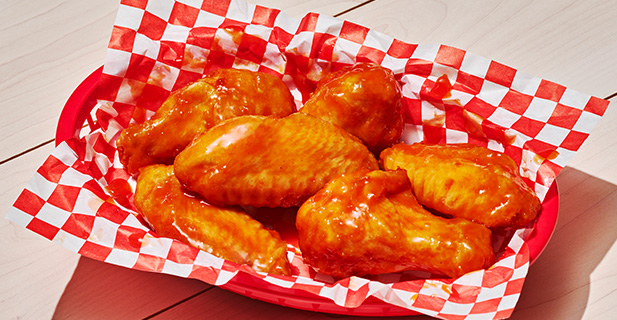
Pizza Hut boneless and bone-in wing calories need the same count and flavor before they can be compared. In the July 28, 2026 snapshot, naked boneless and naked bone-in wings are both 80 calories per wing, but their protein and carbohydrate rows differ. Buffalo, Garlic Parmesan, Honey BBQ, and other flavors also change the result. Count the wings eaten and select the matching type and flavor instead of assigning a generic wing estimate to the whole order.
Match the exact Boneless and Bone-In Wings configuration
The dependable starting point is naked boneless and naked bone-in: 80 calories per wing in the dated catalog. That fact belongs to the exact configuration shown there, rather than to every product with a similar name. A different topping, flavor, size, recipe, or local availability can change the row. Read the selection back before calculating so the result describes the food that was actually ordered.
The serving basis is the actual wing count eaten. This matters because a menu label can describe a product while the nutrition row describes a portion of it. Treating the named product and the serving as the same thing is the common source of an inflated or understated estimate. Use the current official listing when the order was customized or the menu has changed.
- Use the exact product: Boneless and Bone-In Wings.
- Keep the source fact attached: naked boneless and naked bone-in: 80 calories per wing.
- Record the serving basis: the actual wing count eaten.
Calculate the amount actually eaten
One listed serving is not automatically the whole meal. Count the slices, wings, shares, or order fraction that was actually eaten, then multiply only when the source row supports that calculation. When food is shared unevenly, a reasonable fraction is more useful than pretending the portion was exact. It also makes later adjustments straightforward if someone remembers eating more or less.
Avoid transferring a value from one configuration to another just because the food looks similar. Different preparation, sauces, toppings, and sizes can change several nutrition fields at once. A transparent calculation says what was chosen, what the source serving means, and how much was eaten. That method is more reliable than a single total taken from a picture, a promotion name, or someone else’s order.
Keep the rest of the meal visible
Sides, dipping sauces, desserts, and drinks have separate nutrition rows. Do not assume they are included in the main item unless the current source explicitly says so. A sauce should be added only when consumed, and a shared side should not be assigned in full to every diner. Separating components shows which decision changes the total and prevents a bundle label from becoming a vague all-in estimate.
Use the Pizza Hut calorie calculator to add the exact configuration first, then make each additional item a separate meal line. The result can be revised one item at a time and makes calories, fat, carbohydrate, protein, sodium, and listed allergens easier to review together. The site’s nutrition methodology describes the dated source boundaries and the way serving-based entries are handled.
Use nutrition information with the right limits
A calorie figure is planning information, not medical advice or a promise about every restaurant. Ingredients, suppliers, recipes, portions, and availability can change after a source is captured. Review the full nutrition profile when another nutrient is important, and check current official nutrition information before relying on a result for a recent menu change or a precise ordering decision.
Allergen questions need a separate current check. A nutrition entry or a recorded affirmative ingredient flag cannot prove that an item is safe for an allergy, intolerance, or strict dietary restriction. Shared preparation and supplier changes matter. Review current official allergen information and contact the restaurant when that decision is important; the calculator cannot replace direct verification.