Pizza Hut nutrition guide
Pizza Hut Thin ’N Crispy Calories by Slice and Pizza Size
See how Pizza Hut Thin ’N Crispy calories change by topping, size, and slice count, with clear whole-pizza planning totals.
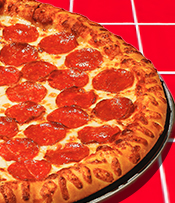
Pizza Hut Thin ’N Crispy calories depend on the complete pizza row, not the word thin alone. In this site’s July 28, 2026 snapshot, a large cheese Thin ’N Crispy slice is 250 calories and a large pepperoni Thin ’N Crispy slice is 270. Both examples list eight slices. That makes the useful first question “which size and topping did I order?” followed by “how many slices did I eat?” rather than assuming all thin-crust pizza has one calorie value.
Use the selected topping and size
The large cheese and pepperoni rows show why a crust label cannot stand in for a full nutrition entry. The cheese slice is 250 calories, while pepperoni is 270. The 20-calorie difference belongs to those matched large Thin ’N Crispy rows; it is not a universal amount to add to every cheese pizza. A different size, topping, recipe, or customization needs its own current source row.
Thin ’N Crispy is often compared with other crusts, but it should be compared at the same size and topping. In the snapshot, a large Thin ’N Crispy cheese slice is 60 calories below the matching large Hand Tossed cheese slice and 120 below Original Pan cheese. That is helpful context, not a rule that one crust suits every goal. Texture, portion, sides, sodium, ingredients, and the actual number of slices still shape the meal.
- Large Thin ’N Crispy cheese: 250 calories per slice.
- Large Thin ’N Crispy pepperoni: 270 calories per slice.
- Both listed large configurations have eight slices.
Convert a slice row only after counting slices
A 250-calorie cheese row means one listed slice. Two slices are 500 calories and three slices are 750 by multiplication. The entire eight-slice large cheese pizza works out to 2,000 calories. For large pepperoni, two slices are 540, three are 810, and all eight work out to 2,160. Whole-pizza totals are arithmetic planning totals; the source value remains the individual slice row.
If a pizza is shared, use the pieces actually eaten. A visually uneven slice can make an eighth-of-the-pizza estimate imperfect, yet it is still clearer than applying a random generic slice estimate. When a piece is split, record a reasonable fraction and preserve that uncertainty. Do not use the large-pizza calculation for a medium, a personal pizza, or a different cut pattern just because the crust name is the same.
Compare more than calories
In this snapshot, one large Thin ’N Crispy cheese slice has 10 grams of fat, 590 milligrams of sodium, 29 grams of carbohydrate, and 13 grams of protein. The matching pepperoni slice has 12 grams of fat, 650 milligrams of sodium, 28 grams of carbohydrate, and 13 grams of protein. Those differences illustrate why a calorie comparison alone does not describe every nutrition choice.
Multiply the rest of the row when you multiply calories. Two cheese slices mean 20 grams of fat and 1,180 milligrams of sodium; two pepperoni slices mean 24 grams of fat and 1,300 milligrams of sodium. These numbers are not medical advice. They simply help make the complete order visible when fat, carbohydrate, protein, sodium, or another listed field matters to the person planning the meal.
Keep sides and drinks separate
Thin crust does not include the rest of an order. Breadsticks, wings, dipping sauce, desserts, and beverages have their own source servings. A breadstick is listed separately in this catalog, and a dip should be included only if it was eaten. Combining all of those items into one pizza estimate hides the choices that most easily change the total.
Open the Pizza Hut calorie calculator, select the Thin ’N Crispy configuration that matches the order, then set the number of slices. Add every side, sauce, dessert, and drink as its own line. This approach lets you adjust one item without rebuilding a vague estimate. It also produces a meal receipt that can be checked against the menu and shared fairly when diners do not eat the same items.
Verify current nutrition and allergen information
This guide uses a dated source snapshot and does not promise that every restaurant or later recipe uses the same values. Pizza Hut can change ingredients, serving information, available products, and customization choices. Check current official nutrition information when a recent menu update or exact configuration matters. The site’s nutrition methodology explains how the dated rows are normalized.
Calorie values also cannot establish allergy safety. The captured rows contain affirmative allergen information, but shared equipment, suppliers, and preparation can change the result. Review current official allergen information and contact the restaurant when an allergy, intolerance, or strict dietary requirement affects the order. Treat a calculator total as a planning tool, not a substitute for current ingredient verification.