Pizza Hut nutrition guide
Pizza Hut Cheese Pizza Calories by Size and Crust
Compare Pizza Hut cheese pizza calories by size and crust, per slice and whole pizza, including Hand Tossed, Pan, Stuffed, Thin ’N Crispy, and Personal Pan.
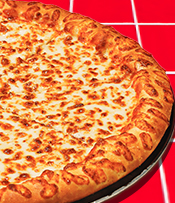
Pizza Hut cheese pizza calories vary by size and crust even when the topping choice stays simple. In this site’s July 28, 2026 nutrition snapshot, a large Hand Tossed cheese slice has 310 calories, a large Original Pan slice has 370, a large Original Stuffed Crust slice has 340, and a large Thin ’N Crispy slice has 250. Each large configuration is listed as eight slices, so a whole-pizza planning total ranges from 2,000 calories for Thin ’N Crispy to 2,960 for Original Pan.
Cheese pizza calories for the main large crusts
Cheese pizza is a useful baseline because it makes the crust difference easy to see without changing the named specialty build. Large Thin ’N Crispy is listed at 250 calories per slice. Large Hand Tossed is 310, Original Stuffed Crust is 340, and Original Pan is 370. The 120-calorie gap between the lowest and highest of these large slices becomes a 960-calorie difference when all eight listed slices are compared.
The nutrition profile changes along with calories. A large Hand Tossed cheese slice has 12 grams of fat, 610 milligrams of sodium, 36 grams of carbohydrate, and 14 grams of protein. Original Pan has 18 grams of fat, 660 milligrams of sodium, 40 grams of carbohydrate, and 14 grams of protein. Stuffed Crust has 13 grams of fat, 730 milligrams of sodium, 39 grams of carbohydrate, and 15 grams of protein. Thin ’N Crispy has 10 grams of fat, 590 milligrams of sodium, 29 grams of carbohydrate, and 13 grams of protein.
- Large Hand Tossed: 310 calories per slice; 2,480 calories for eight slices.
- Large Original Pan: 370 calories per slice; 2,960 calories for eight slices.
- Large Original Stuffed Crust: 340 calories per slice; 2,720 calories for eight slices.
- Large Thin ’N Crispy: 250 calories per slice; 2,000 calories for eight slices.
Why the serving is one slice, not one pizza
The finished cheese-pizza rows are published per slice, and the catalog attaches an official slice count to each configuration. A large Hand Tossed result of 310 calories therefore describes one of eight slices. Two slices are 620 calories, three are 930, four are 1,240, and all eight are 2,480 by straightforward multiplication. The same quantity multiplier applies to fat, sodium, carbohydrate, protein, and every other displayed nutrient.
Whole-pizza totals in this guide are arithmetic estimates based on those per-slice rows. They are useful for dividing a shared order or planning leftovers, but they are not separate nutrition measurements. Restaurant cuts can be uneven, cheese distribution can vary, and substitutions may change the served product. Count the slices actually eaten and keep that practical variation in mind instead of treating every physical slice as laboratory-identical.
Medium Hand Tossed and Personal Pan are separate portions
A medium Hand Tossed cheese pizza is listed at 220 calories per slice and eight slices. Its complete arithmetic total is 1,760 calories. That is 90 calories less per slice than the large Hand Tossed configuration, but the difference comes with a different pizza size. If the order was medium, use the medium row rather than choosing a large number because the slices looked generous on a particular day.
A Personal Pan cheese pizza is listed at 160 calories per slice, with four slices in the configuration. Eating the entire Personal Pan produces a 640-calorie arithmetic total; eating two listed slices produces 320. The word “personal” describes the product format, not the nutrition serving. The source still defines one serving as one slice, so the quantity should match how many of the four portions were eaten.
Cheese pizza compared with pepperoni
Matching the same size and crust gives the fairest comparison. A large Hand Tossed cheese slice has 310 calories, while the corresponding pepperoni slice has 320. Large Original Pan is 370 for cheese and 380 for pepperoni. Large Stuffed Crust is 340 for cheese and 360 for pepperoni, while large Thin ’N Crispy is 250 for cheese and 270 for pepperoni. The topping difference is therefore not one universal number across every crust.
The Personal Pan rows are both listed at 160 calories per slice in this snapshot, showing why it is risky to assume pepperoni always adds a fixed calorie amount. Finished specialty-pizza rows already reflect the standard complete product. When comparing cheese with another pizza, use the matching finished row instead of adding a guessed topping value to the cheese baseline.
Calories are one part of the configuration choice
Thin ’N Crispy has the lowest per-slice calorie value among the four large crusts compared here, but that single fact does not make it the best choice for every person or every meal. Protein, carbohydrate, fat, saturated fat, sodium, preferred texture, and the number of slices eaten all influence the final order. A two-slice Original Pan serving is different from four Thin ’N Crispy slices even if someone focuses only on the crust label.
Cheese pizza configurations include dairy and crust-related ingredient considerations, and the source allergen flags can differ by crust. A product not showing a particular affirmative flag is not proof of allergy safety, especially in a shared restaurant kitchen. Check current official allergen information and speak with restaurant staff when an allergy, intolerance, or strict dietary restriction affects the decision.
Log the exact cheese pizza configuration
Use the Pizza Hut calorie calculator to select Cheese Pizza, then choose the actual size and crust. Start with one slice and increase the quantity to the number you plan to eat. The calculator keeps the official per-slice value and whole-pizza view distinct, making it easier to compare a Personal Pan, medium Hand Tossed, or large crust without carrying a number from the wrong configuration.
Add breadsticks, wings, dips, desserts, and drinks as separate meal lines. That approach shows which part of the order changes the total and makes later adjustments easier. Review the site’s nutrition methodology for serving and qualifier rules, and confirm current Pizza Hut information before relying on the estimate for an ingredient, allergen, medical, or recently changed menu decision.