Pizza Hut nutrition guide
Pizza Hut Pan Pizza vs Hand Tossed Calories
Compare Pizza Hut Original Pan and Hand Tossed pizza calories by matching size, topping, and slice count, then calculate the meal around the pizza.
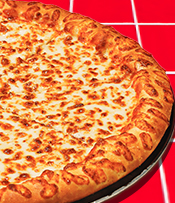
Pizza Hut Original Pan and Hand Tossed pizza calories are not interchangeable. In this site’s July 28, 2026 nutrition snapshot, a large cheese slice is listed at 370 calories for Original Pan and 310 calories for Hand Tossed. For large pepperoni, the matching rows are 380 and 320 calories per slice. Both large configurations are listed as eight slices, so the practical comparison starts with the exact topping and crust, then the number of slices actually eaten.
Start with a matching pizza, not a generic crust number
A crust comparison is useful only when the other details match. For the large cheese rows in this snapshot, Original Pan is 370 calories per slice and Hand Tossed is 310. That is a 60-calorie difference for one slice. For the large pepperoni rows, Original Pan is 380 and Hand Tossed is 320, which is the same 60-calorie difference. Switching both the topping and the crust at once makes it impossible to tell which choice changed the result.
Those are finished specialty-pizza rows, not a base crust plus an assumed amount of sauce, cheese, or topping. The row already represents the named standard configuration. If the order is modified, or if a local menu uses a different build, use the closest current official listing rather than trying to transfer a Hand Tossed number onto a Pan pizza. The Pizza Hut calorie calculator is designed to keep the selected configuration visible while you set the amount eaten.
- Large cheese: 370 calories per Original Pan slice; 310 per Hand Tossed slice.
- Large pepperoni: 380 calories per Original Pan slice; 320 per Hand Tossed slice.
- Both examples use an eight-slice large pizza in the dated source snapshot.
Per-slice calories and whole-pizza arithmetic answer different questions
The values above describe one slice. A large Hand Tossed cheese pizza works out to 2,480 calories when its 310-calorie slice row is multiplied by eight. A large Original Pan cheese pizza works out to 2,960 calories by the same arithmetic. The 480-calorie whole-pizza difference is simply eight times the 60-calorie per-slice difference; it is not a separately published serving value.
Most meals fall between one slice and a whole pizza. Two large Hand Tossed cheese slices are 620 calories, while two Original Pan cheese slices are 740. Three slices are 930 and 1,110 respectively. Recording the number of slices is more useful than labeling a pizza meal as light or heavy, because the same crust decision has a different practical effect at one slice, two slices, or a shared half pizza.
Fat, sodium, carbohydrate, and protein can also change
Calories are not the only difference between these matching large cheese rows. One Hand Tossed slice has 12 grams of fat, 610 milligrams of sodium, 36 grams of carbohydrate, and 14 grams of protein. One Original Pan cheese slice has 18 grams of fat, 660 milligrams of sodium, 40 grams of carbohydrate, and 14 grams of protein. Protein is the same in this comparison, while fat, sodium, carbohydrate, and calories differ.
For pepperoni, one large Hand Tossed slice has 14 grams of fat, 650 milligrams of sodium, 36 grams of carbohydrate, and 13 grams of protein. The large Original Pan pepperoni slice has 19 grams of fat, 680 milligrams of sodium, 39 grams of carbohydrate, and 13 grams of protein. These are neutral planning details, not individual medical advice. When another nutrient matters, review the whole meal rather than using calories as the only filter.
Size and slice count cannot be borrowed across orders
A large-pizza comparison should not be used as a shortcut for a medium or Personal Pan order. The menu defines serving rows by the complete configuration, and smaller pizzas have their own values and slice counts. A Personal Pan pepperoni pizza, for example, is listed as four 160-calorie slices in this snapshot. Its label describes a personal-size product, but its source row still uses a per-slice serving rather than silently treating the whole pizza as one serving.
Likewise, the physical cut matters. If a pizza is cut unevenly, a simple one-eighth estimate is still practical for planning, but it is not a laboratory measurement of every piece. For a shared order, start with the listed number of slices, count the pieces you ate, and note an approximate fraction if pieces were split. Avoid inventing a universal calorie amount for a slice that does not match its size, crust, and topping.
Build the rest of the order as separate meal lines
Choosing Hand Tossed instead of Original Pan does not include or exclude the sides. Breadsticks, wings, dipping sauces, desserts, and drinks each have their own serving definitions. For example, the site’s breadstick row is 140 calories per stick, while a dipping sauce should be added only when it was actually consumed. Keeping each item as a separate line makes it clear whether a change came from the pizza crust, the slice count, or an add-on.
This approach also works when people share food. If two people divide a pizza and one person has wings or a drink, each person can calculate the part they actually ate instead of assigning the complete order to both diners. Open the Pizza Hut calorie calculator, choose the matching pizza configuration, set the slice quantity, and then add the remaining items one at a time. The resulting receipt is easier to revise than a single guessed dinner total.
Verify current recipes and ingredient information before ordering
This guide uses the dated snapshot named above, so it is a planning aid rather than a promise about every restaurant, promotion, or future recipe. Pizza Hut may update ingredients, portions, available crusts, and nutrition information. Check the current official nutrition information when a recent menu change, customization, ingredient question, or exact restaurant availability affects the choice.
Allergen details require separate care. The matching pizza rows in this snapshot carry affirmative ingredient flags, but shared preparation areas and changing suppliers mean a calorie guide cannot establish allergy safety. Review current official allergen information and contact the restaurant when an allergy, intolerance, or strict dietary requirement is involved. The site’s nutrition methodology explains how its dated rows and serving assumptions are handled.