Pizza Hut nutrition guide
Pizza Hut Pepperoni Pizza Calories by Size and Crust
Compare Pizza Hut pepperoni pizza calories by size and crust, per slice and whole pizza, including Hand Tossed, Pan, Stuffed, and Thin ’N Crispy.
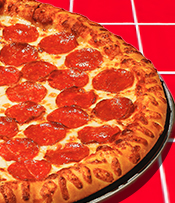
Pizza Hut pepperoni pizza calories depend on both size and crust. In the July 28, 2026 nutrition snapshot used by this site, a large Hand Tossed pepperoni slice has 320 calories, while a large Original Pan slice has 380, a large Original Stuffed Crust slice has 360, and a large Thin ’N Crispy slice has 270. Each of those large pizzas is listed as eight slices, so the correct whole-pizza estimate comes from multiplying the selected slice row by eight.
Pepperoni pizza calorie comparison
For a large pizza, crust changes the calorie result more than a quick generic “pepperoni slice” estimate suggests. Large Thin ’N Crispy is the lowest of these four national-menu large options at 270 calories per slice. Large Hand Tossed is 320, Original Stuffed Crust is 360, and Original Pan is 380 calories per slice. The range between Thin ’N Crispy and Original Pan is 110 calories for one slice and 880 calories when the entire eight-slice pizza is compared.
The same configuration also changes other nutrition values. A large Hand Tossed pepperoni slice has 14 grams of fat, 650 milligrams of sodium, 36 grams of carbohydrate, and 13 grams of protein. Original Pan has 19 grams of fat, 680 milligrams of sodium, 39 grams of carbohydrate, and 13 grams of protein. Stuffed Crust has 16 grams of fat, 790 milligrams of sodium, 39 grams of carbohydrate, and 15 grams of protein, while Thin ’N Crispy has 12 grams of fat, 650 milligrams of sodium, 28 grams of carbohydrate, and 13 grams of protein.
- Large Hand Tossed: 320 calories per slice; 2,560 calories for eight slices.
- Large Original Pan: 380 calories per slice; 3,040 calories for eight slices.
- Large Original Stuffed Crust: 360 calories per slice; 2,880 calories for eight slices.
- Large Thin ’N Crispy: 270 calories per slice; 2,160 calories for eight slices.
Per slice and whole pizza are different questions
Pizza Hut publishes these finished specialty-pizza values on a per-slice basis, with a slice count attached to the configuration. That means 320 calories describes one large Hand Tossed slice, not the whole pizza. Two slices are 640 calories, three are 960, and all eight are 2,560. The same multiplication applies to fat, sodium, carbohydrate, protein, and the other fields, so counting the number of slices eaten matters throughout the nutrition estimate.
Whole-pizza numbers in this guide are arithmetic planning totals, not separate laboratory rows. They assume the pizza is divided into the official number of slices and that the published per-slice row represents each portion. Real restaurant cuts and topping distribution can vary. If one slice is visibly much larger or smaller than another, an eight-way multiplication remains useful for planning but should not be treated as a precise measurement of that individual slice.
Medium and Personal Pan portions need their own rows
A medium Hand Tossed pepperoni pizza is listed at 230 calories per slice and eight slices, or 1,840 calories by multiplication for the complete pizza. That is 90 calories less per slice than the large Hand Tossed row, but the restaurant’s serving definition is also a smaller pizza. Logging a medium slice as a large slice, or using the medium whole total for a large order, creates an avoidable mismatch.
The Personal Pan pepperoni pizza is listed at 160 calories per slice and four slices. Its full-pizza arithmetic total is therefore 640 calories. The phrase “personal pizza” does not mean the nutrition row is already the entire pizza: the catalog still defines the serving as one of four slices. Count all four if the entire Personal Pan was eaten, and count only the actual slices if part of it was saved.
How pepperoni compares with cheese pizza
Pepperoni does not add the same amount to every configuration, but the finished rows make a direct comparison possible. A large Hand Tossed cheese slice is 310 calories, compared with 320 for pepperoni. Large Original Pan cheese is 370 versus 380 for pepperoni, and large Thin ’N Crispy cheese is 250 versus 270. These are modest per-slice differences, yet they become more noticeable across several slices.
Calories are not the only distinction. Pepperoni can also change fat, sodium, and other values. If the decision is between cheese and pepperoni, compare the exact matching size and crust instead of subtracting a universal topping estimate. The finished specialty rows already account for the complete standard build, which is more reliable than combining a cheese-pizza number with a guessed quantity of pepperoni.
Sodium, allergens, and customization still matter
One large pepperoni slice ranges from 650 milligrams of sodium for Hand Tossed or Thin ’N Crispy to 790 milligrams for Original Stuffed Crust in this snapshot. Multiple slices scale that value quickly. This does not make one crust universally right or wrong, but it shows why a calorie-only comparison can hide a meaningful part of the meal. Review the full nutrition receipt when sodium, saturated fat, carbohydrate, or protein is part of your plan.
The source rows list allergens for each configuration, and crust choices can differ. Shared kitchens and equipment also mean that a missing allergen flag is not proof that a product is free from that allergen. Recipes, suppliers, portions, substitutions, and availability can change after the source date. Use the current official allergen information and contact restaurant staff when an allergy or strict restriction affects the order.
Calculate the pepperoni pizza you actually plan to eat
Open the Pizza Hut calorie calculator, choose Pepperoni Pizza, then select the size and crust that match the order. Add one slice as the starting quantity and increase it to the number you expect to eat. The calculator uses the matching finished row and keeps the official whole-pizza view separate, so you can compare one serving with the entire pizza without confusing the two.
Add wings, breadsticks, dips, desserts, and drinks as separate meal lines rather than folding them into a rough pizza estimate. This produces a transparent receipt and makes it easier to change one choice at a time. Before ordering, review the site’s nutrition methodology and verify current Pizza Hut details, especially when accuracy, ingredients, allergens, or a recent menu change matters.